ISSUE 222 May 2026
Ann Morgan, Yorkshire Indie Playwright talks with Andrew Sugden- April 2026
A conversation between two writers. A playwright and a novelist.
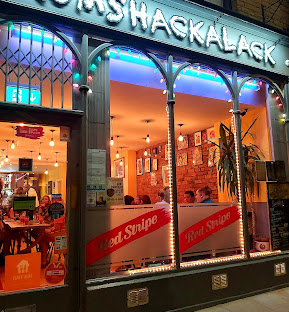
The stage set. Ann and Andrew, each with individual teapots, sat drinking tea in the Rum-Shack-a-Lack Bar, North Parade, in Bradford. Music, chatting and clattering crockery intruding from the background. Occasional interruptions from the young lady serving customers. Ann and Andrew sit opposite sides of a square table smiling at each other.
The beginning; "Well many moons ago I..."
Andrew; I’m thrilled to be chatting with you about your writing Ann. I’m interested to know when you started writing?
Ann; Well, many moons ago, I started writing poetry, it was then I got into stand-up comedy and acting. Basically, I went to see a friend of mine who was in a Shakespeare play and I thought…hey I might have a go at that, it looks fun. And then I got involved and from there got into starting to write.
Andrew; Did you write as a youngster?
Ann; There were bits and pieces I did as a child but it's something I really only came back to as a fully grown adult, (laughed,) that’s been quite a few years. (sip of tea).
Andrew; And what kind of poetry do you write Ann?
Ann; I haven’t written any poetry in a while. A lot of monologues, which is kind of… different to poetry… but it is that whole… one person thinking.
Andrew; Yes, kind of Shakespearean, got that poetic structure.
Ann; Yes… I’ve been doing some Shakespeare-esk stuff recently. I did some at the Alhambra when the RSC was touring with Hamlet. Before the performance on the Saturday Matinee, we had people who were entertaining the audience that were going in to see Hamlet. I did a monologue as Gertrude’s ghost, after death trying to reach out to Hamlet and explain her take on what had happened and trying to win Hamlet over. It was written Shakespearean style. (Big smile and giggle) So yes, I have been dipping my toe into Shakespeare. A few pieces have been based on Shakespearean language and around Shakespearean characters.
Andrew; Your plays they’re quite earthy… aren’t they?
Ann; There’s been a variety… I started off doing a range of comedy styles, including borderline slapstick in places, I started down that route. But I’ve gone onto drama (Big smile and giggle). A couple of pieces I have been told it’s “Harrowing” in places, which is said in a very nice way… It’s good reviews, which is great when that’s what you’re going for. Yes, a lot of its based on gritty realism. (She hesitates). A bit political (laughs). A lot of it has been period pieces as well.
Andrew; What draws you into that gritty realism as a subject?
Ann; Various things. The piece I’ve got on at the moment, is based around the centenary of the General Strike, 1926. My grandfather was a miner during that time. I have his lamp. It sits and stares at me in the house. (They both laugh) It’s got his name, date of issue, the name of the mine, the lot. He was a trade unionist as well. That’s kind of a visible push in that direction, I guess, to write that.
The ‘Past Present’ which is going to be on in November, at the Bradford Playhouse. That’s based in the 1960’s. A valley was flooded in Wales, to make water for England, and sold at a profit. It’s inspired by what happened rather than an actual telling of the events. It’s very much about the political dynamics of that situation and the impact on people in that scenario.
Research... "Oh gosh yes"... and choice of subjects
"I’ve got a monologue coming up on 30th May, in Farsley Sunnybank Mills for the New Age Foundation."
Tickets HERE
Andrew: Do you do a lot of research for your plays, Ann?
Ann: Oh gosh yes! Research is the starting point. You can’t get away from research. I mean in something contemporary, there will be like… where somebody has a medical condition, or someone's got something, a situation going on in their life. Research is key. But if you’re doing historical, obviously, that screams research at you like… dramatically!
I did a piece for the Mama Quilla Project in London. That was about women and war. I wrote about the Japanese Comfort Women during the second world war, and their suffering.
That was really very difficult to research. Women from Japan and allied nations to Japan, were forced to become sex slaves for their troops. Widely covered up, for the obvious political reasons. They did not choose to do this, they were taken, warehoused in the middle of nowhere and shiploads of troops brought in. The women went through hell, were malnourished and not looked after medically. Many committed suicide trying to… they couldn’t take any more… you know. Miscarriages obviously.
(Ann paused, gazes into the ceiling. Andrew and Ann sit silently a moment, Ann looks across at Andrew.)
Their lives were ruined. Unacceptable what happened. They are still fighting to this day to get justice and an apology from the Japanese government for what happened to them.
That was incredibly harrowing to research and to write about, and it took me four different pieces before I settled on the one that was right. The three other versions I did… I didn’t feel they were good enough to honour the women’s suffering.
Andrew; (leans forward) Did you talk to any of these women?
Ann; (shakes her head). No because… mostly there will be a language barrier. I did my research online, looking at their testimonies… which is as good as you’re going to get. A lot of the women will be dead by now, and a lot of them are elderly, so it was difficult. It was a case of having to go to do the research with what was available out there.
Andrew; And when was that performed Ann?
Ann; That was down in London at the Mama Quilla project. I got first runner up at the Carr-Webber Memorial award.
There have been a few historical bits, I’ve done some work around Julia Varley, a local suffragette from Bradford and a pioneering trade unionist, she was in the Manningham Mills strike and was imprisoned twice for being a suffragette. Awarded the Women's gold badge by the TUC, first woman to hold a woman’s seat at the U.N. She was really influential, yet nobody knows her.
Andrew; there’s a plaque in Bradford city centre.
Ann; (Nods,) Yes. There is down on what was the old Transport and General Workers Union building on Sunbridge Road, which is going to be unveiled on the 1st of May… Delayed unveiling because of the pandemic.
She travelled all over the country as a trade union organiser. The Midlands and Cradley Heath Chainmakers struggle in the West midlands, the Cornwall Clay makers fight, and many others. I’ve done some work around her. I put a piece on about her at Undercliffe Cemetery last year where the audience moved around the cemetery with the action, because she was buried there.
She was a ghost organising the other ghosts and righting the wrongs in the afterlife. Interactive and fun.
Future Plan? "Oooh they should be kept under wraps, but..."
Andrew; What plays have you got planned in the future.
Ann; Ideas wise… Oooh they should be kept under wraps… (smiles, sips tea, carefully puts her cup back on the table.) … but I will let you in to a few secrets. I’m currently writing something that is childreny and Christmassy. Which is a huge departure for me. With fingers crossed should be on this Christmas… (she nods) things are in the pipeline and that, (laughs.)
Also, hopefully should have something on in May which is an historical piece, in a years' time. Plus, a book adaption that should be on later this year in Liverpool. There’s also a couple of other pieces that I’ve got agreement on which I need to get going. But will be a little bit different again and a children’s piece… the other two are definitely for adults.
Andrew; so, you write around a lot of different issues, like from fun to quite dark truths about humanity?
Ann; Yes. I seem to have gone for the range, (both laugh).
Andrew; Yes, that’s amazing.
Ann; yes, I’ve done a lot of short stuff as well. Which is kind of… its fun to do. Just doing bits like ten fifteen-minute stuff. Which you can get done very fast and turn around which is quite nice. And then there’s the monologues as well. I did have one monologue on in America last year, which is quite nice. I’ve got a monologue coming up on 30th May, in Farsley Sunnybank Mills for the New Age Foundation.
I’ve got a huge project as well to write based on a true story, and somebody did ring me this morning and ask me if I would be prepared to write something for them. So, I’ve got quite a lot of stuff in the air at the moment.
Writers Groups… I am and I aren't...
Andrew; That’s fantastic. So, Ann, are you part of a writer’s group?
Ann; I am and I aren’t. I’m part of Lost Fox, which is a loose collective.
So, we’re all taking in turns to do a bit of writing and we bring in actors, directors and all the rest of it.
A collection that we did recently, ‘Family Matters’ sold out at Seven Arts, Leeds and Bradford Playhouse. And that included my 1926 General Strike piece, about two feuding brothers, on opposite sides during the strike.
Leeds artist development programme, which supports local creatives and helps to generate new work, is known as Furnace.

Hull artist development programme, which supports local creatives and helps to generate new work, is known as Community Theatre makers and Actiii
Lost Fox is a whole bunch of writers that do stuff at different times and we all met through Leeds Playhouse Furnace. In Furnace Tuesdays, to be precise and Leeds Playhouse has Furnace, which is their artist development arm.
We used to have Furnace Tuesdays which once a month Furnace people could meet up in a room in the Playhouse, and we could bring speakers in to do talks or we could work amongst ourselves and do various things, and that’s how we all met.
But unfortunately, it’s not happening now so… that would be something I’d like the Playhouse to bring back.
Andrew; Leeds Playhouse furnace gave good support then to New Writers?
Ann; Yes, and they do still, but in different ways.
The Furnace Tuesdays brought us lot together, in order to create ‘Lost Fox Productions’ and there will be future ‘Lost Fox’ stuff happening.
... and local theatre companies...
Other than that, ‘ACT’ a local theatre company are taking on my play the 'Past Present’ about how the past and present affect each other.
Other than that there is always self-production. It’s what I did with the Jula Varley piece. There are other bits and pieces I’ve been involved with, the Shakespeare Nation project, part of The Royal Shakespeare Company, got little bits at St Georges Hall and the Alhambra, so yeah, it's getting involved in things but also going out and finding opportunities.
You have to really try to go out and find them because the submissions route is hard.
Andrew; I was going to ask you about that.
Ann; there’s quite a few out there, and you write to a theme, but competitions really high, and there’s so many out there applying for things. That it’s like, preparing stuff that doesn’t get used. I’ve done a lot of that, and I have had variable success and I’m not going to complain about the amount I have had on through that.
I’ve had some quite good success, and I’m quite happy with that but to get the longer pieces out there you have to really find someone to take it on for you.
Luckily, I have some people who will take on some of my stuff.
Like a Literary agent... "No not at all... it's very mucy DIY... and a huge learning curve."
Andrew; Is that like having a Literary Agent?
Ann; No, not at all. Its finding venues and companies that are prepared to put it on.
Andrew; Oh right… so you do it yourself really?
Ann; Do it yourself theatre production. (They both laugh)
Andrew; Like self-publishing in the author world?
Ann; Yes, It’s very much DIY. Go out and find the opportunities. Go out and find where you think you can do it.
You don’t necessarily have to have a theatre; it can be in various locations. I used a cemetery. There were i’s to dot, and t’s to cross, but yes.
Andrew; How do you find the actors to do it?
Ann; Well because I’ve been involved with acting, that helps… Furnace Tuesdays had a network of actors, writers, etc… I’ve got some contacts, to start getting these things going. But it’s always hard.
Andrew; I think, when you do it yourself, it is but on the other hand, you learn a lot more, don’t you about the whole business.
.JPG) Photo by; Juan De-Leon Padmore. Instagram stills_juandlp
Photo by; Juan De-Leon Padmore. Instagram stills_juandlpCoping with criticism and feedback ... Beta readers
Andrew; I understand that one, (laughter). So, you’ve got to a point where people are coming to you to write? Your work has been recognised, and people value you. They’ve seen what you’ve written and come to you and said, “will you write this for us.” That’s fantastic, isn’t it?
Ann; Well to be honest, most writers are really insecure. And we don’t really believe it. We believe in our work, but we don’t necessarily believe in ourselves. So, it's like I’ll have this play and I’ll think it's really amazing but if I ask someone else to read, I’m just a wreck. Absolute wreck, (Ann giggles, shrugs shoulders)
What if they don’t like it? What’s the feedback? Because you have to give people a chance to read it, to get feedback before you finalise it.
Andrew; Sort of Beta readers?
Ann; Yes.
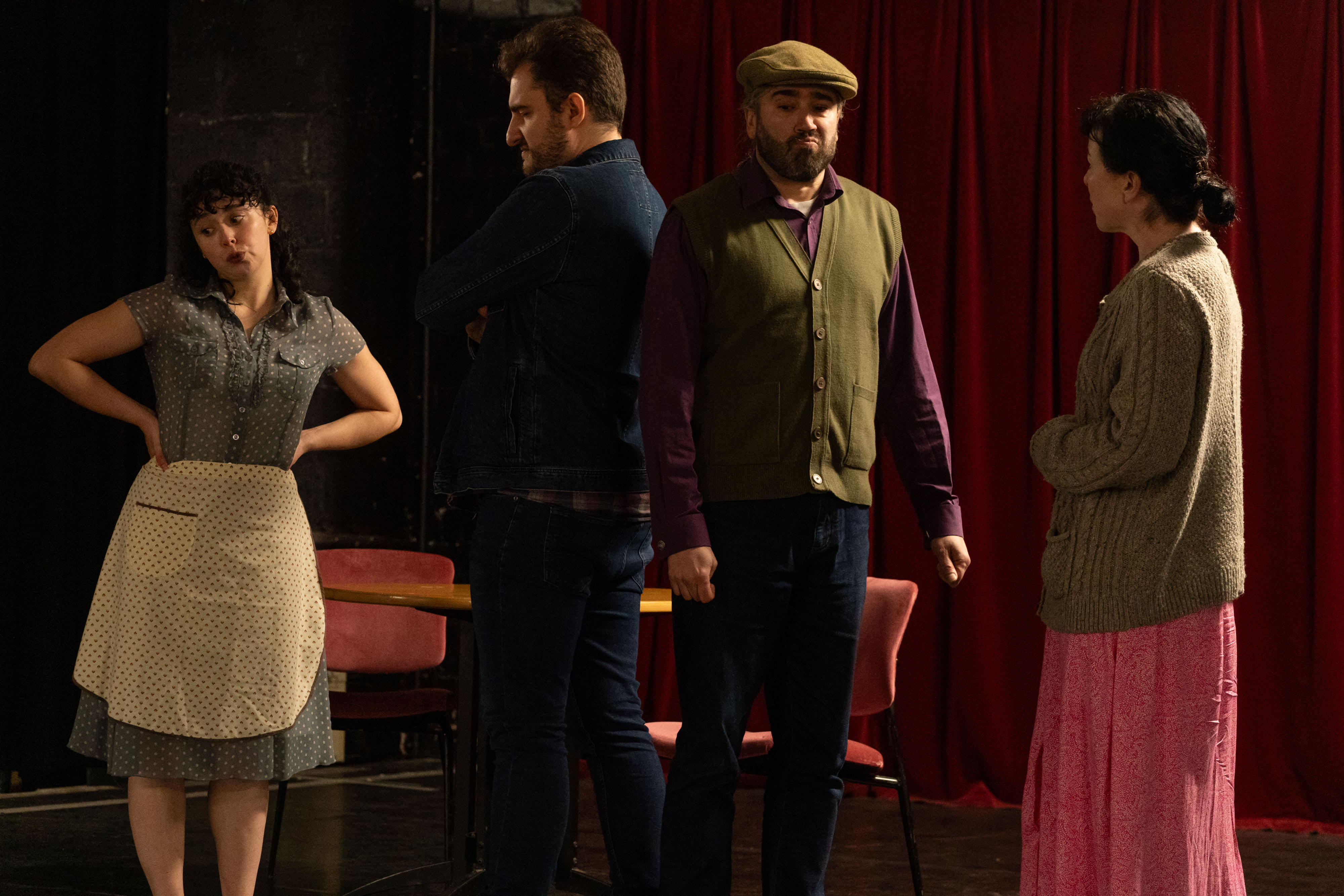 Photo by; Juan De-Leon Padmore. Instagram stills_juandlp
Andrew; … and also, you’ve got to have that little bit of space, perhaps where you allow and realise that people might not like what you’ve written and like criticise some bits of it. That’s difficult as well?
Ann; It’s really hard, and you have to approach that in the right way,
and everyone likes to do it differently and it is very vulnerable moments, and you have to accept that. It’s important that you explain to people what you're talking about, it’s important that they can express their view in in a way that is constructive.
So, it’s not just “I don’t like this!” but rather “I don’t like this because…”
And when you get feedback, some people put it verbally, some people do it face to face, some people do it by email. Personally, I prefer email. Because then I can look at it and no one sees my face (laughs,) and also you can go away and come back because it might be a lot to absorb and particularly if you disagree with it.
At the end of the day, you have to go and come back to it and say, ‘okay so I don’t necessarily agree with them saying that. That’s explained in there… so why are they saying that?’
Or it might not be what they said, but it might be a case of why have they said that? Maybe I’ve not made it clear enough? Rather than this extra bit needs to go in, maybe it needs to be just emphasised a bit more or whatever, or perhaps their right, that bits a bit lengthy and needs cutting down or whatever.
But it’s always nice to walk away and come back, in my case (laugh) when I’ve sort of had time to absorb it. Got over that initial vulnerability of reading it because it is a very vulnerable feeling.
Andrew; I understand that. I mean there are organisations that run Beta groups and Arc groups and stuff like that. From my perspective as an indie novelist… I use Fabled Planet, which is like a Sci-fi-Fantasy group.
What they do is give the Beta readers a structural guide. That helps them think about the characters arc, and all the rest of it. Is it similar in the theatre world?
Glimpses
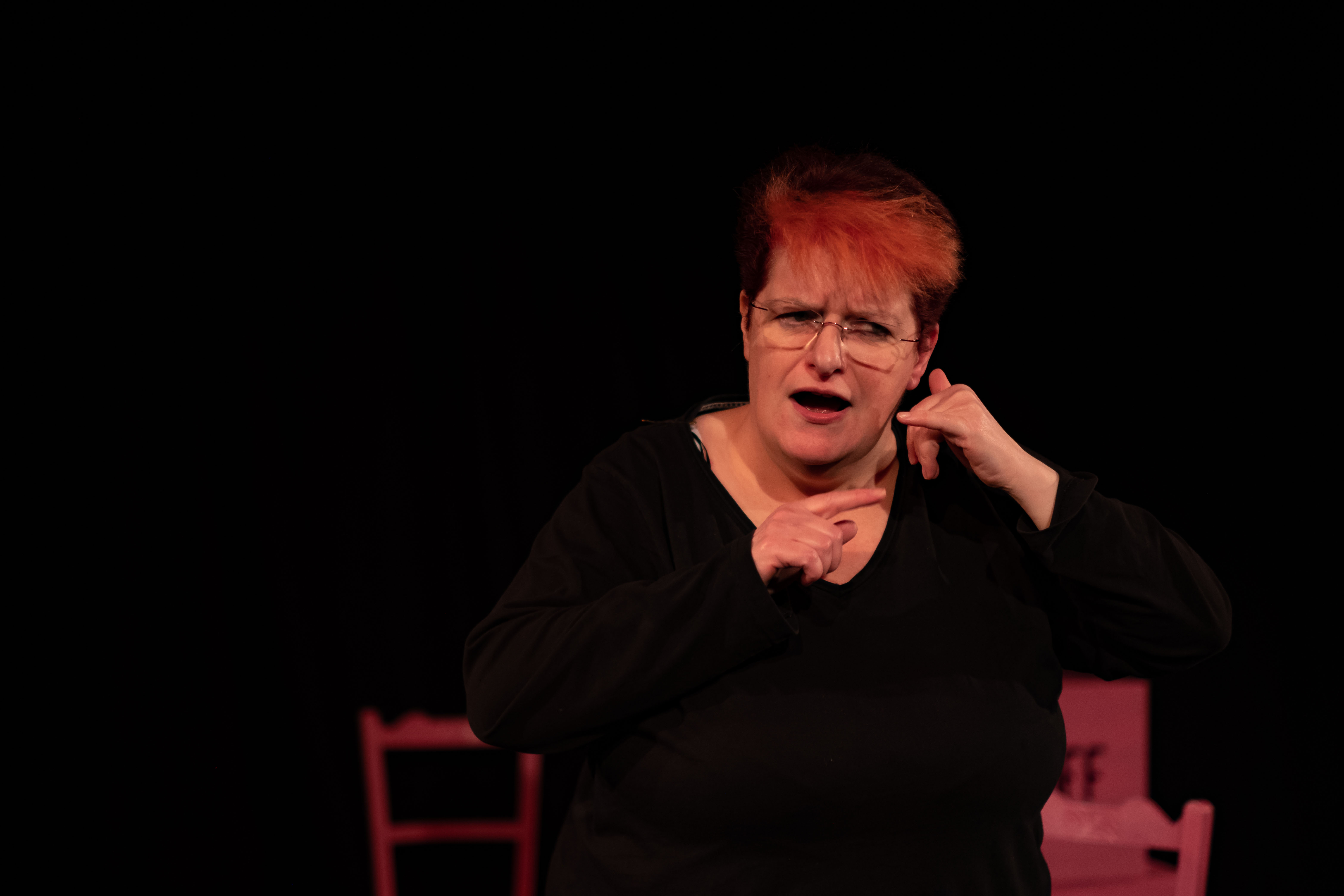
Ann on stage
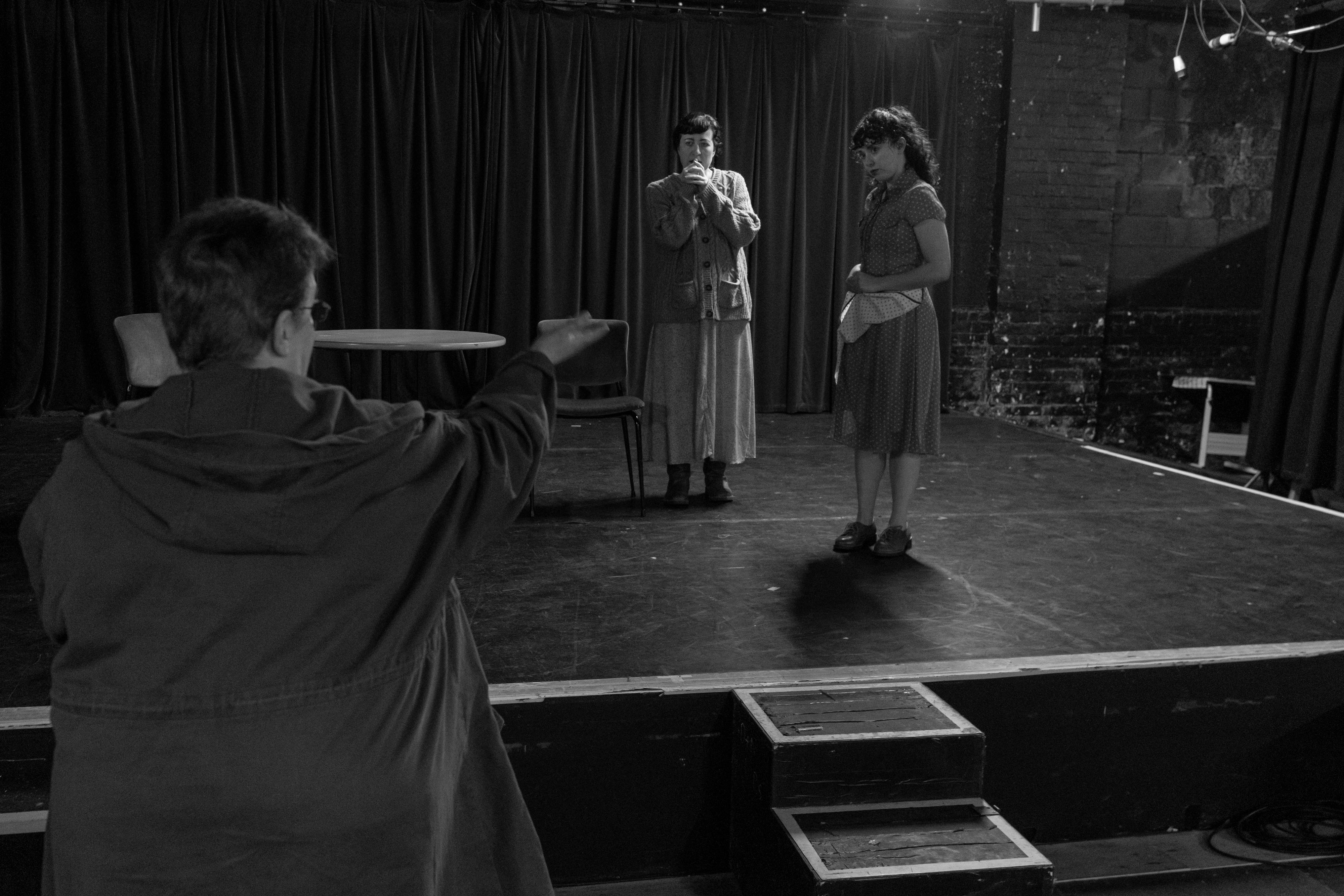
Ann directing her play 'Not a Penny.' Photo by; Juan De-Leon Padmore. Instagram stills_juandlp
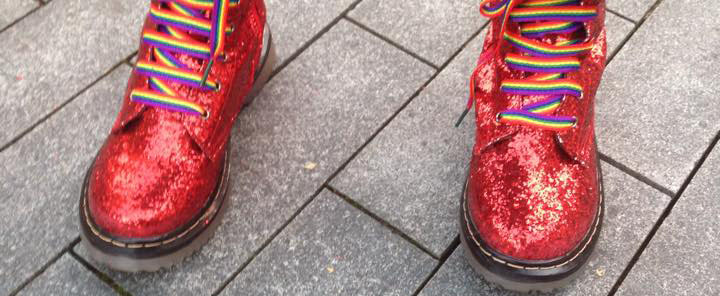
Ann n Boots
Writing approaches...
Ann; It depends on who you ask I guess, but yes, that is very important.
For my writing processes, I do all that stuff first. Writing the dialogue is very much the last thing I do, which sounds weird because the plays all about the dialogue.
Andrew; (nods) You know it is, and I find that interesting, because my writing starts with the dialogue and action and then it just flows out of my head and then later on I add description. Which I think of as the sculpting mode.
Ann; When I first started writing I did what was called in the industry, a vomit dump. Which is basically just dumping down everything from your brain, then you looked at it and then decided what you kept.
But these days now I have these documents for structure etc which I write first. It’s just a series of questions or things… you know, characters, story line, how do we relate to this character.
Andrew; Like a mind map, a plotting tool?
Ann; Of the character, yes. The action, inciting incident, all the things you need to make a story work. What is act one, what is act two, what is act three, what is the climax, what is the… you know, and look at the nuts and bolts of what goes into a story, and put all that down, and work through all that and write down, this is going to be act one, act two and then do my synopsis.
I write it out in prose and then once I’ve got that. It’s all then ready, ready to go. The characters are built and I know what the action is, going forward. Then I can just zoom in and the characters take over and do the writing, and I just sit back and the characters do all the work. That’s me off, I’m mentally done, the characters take it off my hands, writing it.
You might think that sounds a bit weird, but it's exactly what happens. That’s what you need to do.
Andrew; I understand that. Sometimes when I’m working on my characters, they write a letter to me. obviously, I’m writing it, and then I post it, and when it comes to me… and it’s like, they are telling me about themselves. I’ve never met them and it really helps me when I’m writing. It’s really weird, but it’s one of the things I do.
Ann; Yes, it's different what writers do, but dialogue is last for me. Completely last. Which is what it's all about at the end of the day, it's all dialogue.
Andrew; Well yeah, I mean, I guess when you’re writing a play, you’re listening to the dialogue but watching the action. Because the actors are putting in all the colour that you would be reading about if it was a novel.
Ann; They put in the actions, the emotions. So, getting up and zooming across the room because they’re angry or throwing something. These are the things that actors bring. Voice level changes or getting out of a chair aggressively or slumping into a chair emotionally drained or whatever.
The way they carry words is so important. It’s like using an instructional manual.
Andrew; so, do you input all that into it or do they interpret it from what you’ve written? Or is it a combination?
Ann; A lot of it should be in there, but then the Director takes over and puts his vision in there.
So again, you do your part, Character, Joe Bloggs, Male, 35, likes fishing, keeps pet rabbits, introvert… you know what I mean, you give character notes. Which are read at the start of the play, in the beginning. You do that before you read the play. So people know. The director, and the actors know what they’re supposed to be focusing on, to bring the words out.
Andrew; That’s so interesting.
Ann; You put some direction into the play. You know like, so-n-so gets up and leaves. Where so-n-so enters, and pieces like that and …
Andrew; Exit stage left pursued by a bear… (Both laugh)
Ann; (laughing) I actually did that. I did actually exit left pursued by a bear, earlier on this year in panto.
Andrew; Yeah? I think that’s good.
Ann; I was so chuffed when I found out I was going to be doing Goldilocks and the Three Bears, and I actually did get to exit left. To have that as a stage direction amused me.
Andrew: Well you’ve got to haven’t you when you’re on stage and you’ve got bears! So what would you say to new writers coming along?
Ann; I would, as dull as it sounds, read how to write and read plays… or go on some courses. There are free courses out there, you don’t necessarily have to pay. Suss out what’s available, sometimes are good, sometimes aren’t so good.
But I would read up, there’s plenty of literature out there. Most courses will tell you exactly the same thing if they’re any good. All about the structure. The structure is key and you have to learn the structure otherwise you will never be any good. It just won’t work without the structure. You have to learn structure.
The other thing I would advise, is read scripts. Read scripts you like and ask yourself how does this work, why does it work, and if you want somebody to read your script, format it. Theatres are very loose about formatting in comparison to T.V. or screen, who are very, very, precise about format. It’s got to be a certain way and nothing else.
I mean, there is a little looseness to it, but it has to be clear for reading. So have a look at scripts and do something like that.
Writing software
There is software out there, free if you can find them. But yes, cheap software… I won’t name any.
Andrew: I use Scrivener.
Ann; Snap.
Andrew; Oh, do you. I write in word and then input it into Scrivener usually, so I can move scenes around, and easily find different parts of my story and everything.
Ann; I do all my structural Docs in word, then when I write the dialogue, that’s all in Scrivener. Then I transfer it all back into word, for spell checking, and for sending out in PDF.
Andrew; Yes, though Scrivener will do that. It’ll put it in manuscript form, it’ll put it in script form. It’s got its own format.
Ann; Yes, I’ve found not everyone’s software is happy with it. So it can be an issue at the other end. I’ve had stuff go out, and realised it arrived scrambled at their end.
Andrew; Will it not, if you put it into script format and output it as a word document.
Ann; best off doing PDF.
Andrew; Yes, from Word. I put it into Word then from word into PDF.
Ann; Yes, people accept word, but if you transfer into Word, I think there may be an issue… I would always do PDF. That way, PDF is always going to transport fine.
Andrew; I shall bear that in mind.
Ann; I didn’t realise, coz I’d sent something out, which was in Scrivener. Transferred into word and sent it out to people, and at the read through the words were jumbled. So, it's all there, but just jumbled. And it looked like it was so full of mistakes, which was awful, and when I went back and checked, I was so embarrassed. I couldn’t believe I had missed all these errors, and then when I went back and looked at mine to correct it all, horrified. It was all fine.
So, it was scrambling that was the culprit. So yes, always send out PDF’s.
Andrew; Good advice. Is there anything else you’d like to say.
Ann; The advice to people starting out- don’t be afraid. Just go for it. I did. What have you got to lose? You know. Get someone you trust to read it, once you’ve written it. But just go for it.
You’ll see lots of things out there you can have a go at. Some will send you feedback, some won’t. Just have a go. There are quite a few submissions out there. Have a go at one of them. And do it and see what happens. You’ve got nothing to lose and maybe something to gain.
Reasons to write muses and other things...
Andrew; Very good advice. But Ann, why do you write? Do you write for other people, the audience, or do you write for yourself?
Ann; What do you mean? Ghost writing or…
Andrew; No, no, I mean… from the point of view of the meaning of what you are writing, is it for yourself that you write it, and it just so happens that you're going to share it, or, is it for other people and it just so happens, you’re writing it?
Ann; that’s a really good question. Because with writing, there’s always a piece of you in it. So yes, it is partly you but… ahh, some people are cathartic writers, who write things to get things off their chest. Writing for themselves.
But I’ve never actually… I mean, yes, we all take things to heart and put them in, you know, people we know, situations and stories, stuff that we have in real life and put it in.
So, I guess there is an element of that. But that stuff is part of you, and is you, but you should always write for the people, I think, not for yourself, because at the end of the day, it's your audience that’s important.
If you want to get it out there, writing for yourself is not really going to reach anybody else. You’ve got to think about pleasing a large audience. But if you’re just writing for fun and you don’t want it to necessarily get staged, writing for yourself is fine, but if you want to get it staged, and you want more than just that first piece. The difficult second piece, like the difficult second album… (both laugh)
If you just want to cathartically write for yourself, it’s very difficult to write a second piece, because you’ve put everything into the first one. And you’ve got nothing to put in the second one.
But the muse will strike. The muse strikes at different times.
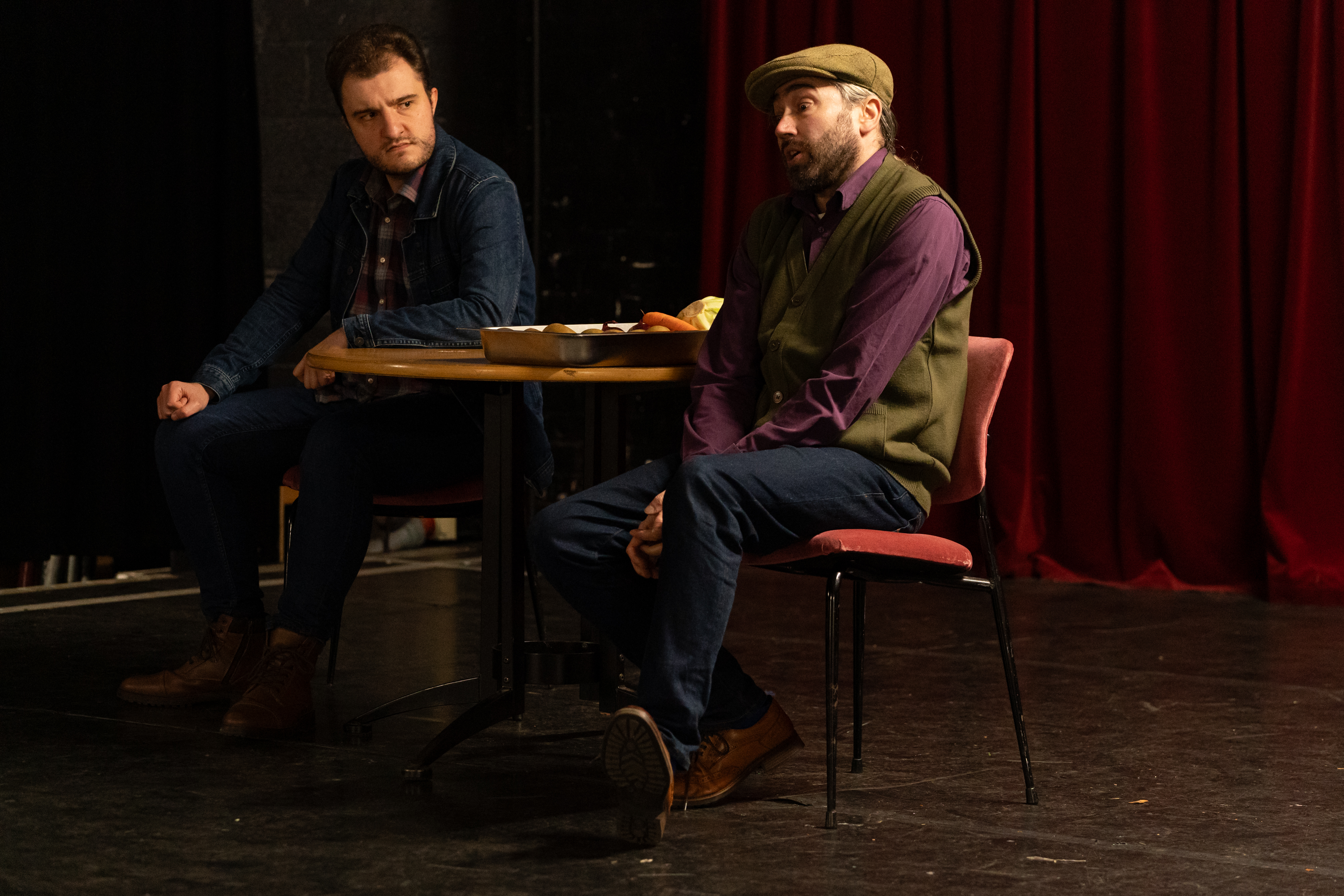 Photo by; Juan De-Leon Padmore. Instagram stills_juandlp
The biggest thing is, don’t put it off! Because ‘Oh, I’ll just do this first or I’d do that first.’ It’s like a vacuum of your time.
Set yourself a time, whether it's in the morning, or ten-o-clock at night or whatever suits you and dedicate that time, every time. Then that way you’re not going to be stressing about not doing it all day and you’re fresh going into it, and you can do everything else without that blurry thing hanging over you and making you feel bad.
Andrew; So, when the Muse strikes, do you instantly jump into a notebook and write it down or…?
Ann; Erm… I have been known to, yes. I do tend to make a few notes, but at the moment because I’m doing very dedicated pieces my mind appears to be focusing on that, rather than new pieces, because I’ve got, quite a lot of things to write at the moment, which I’ve kinda like promised.
Andrew; Yeah, yeah, you’ve got a lot of work on. That’s brill.
Ann; Yes so, so I need to get those completed. I’m trying to keep my muse focused on that rather than new stuff.
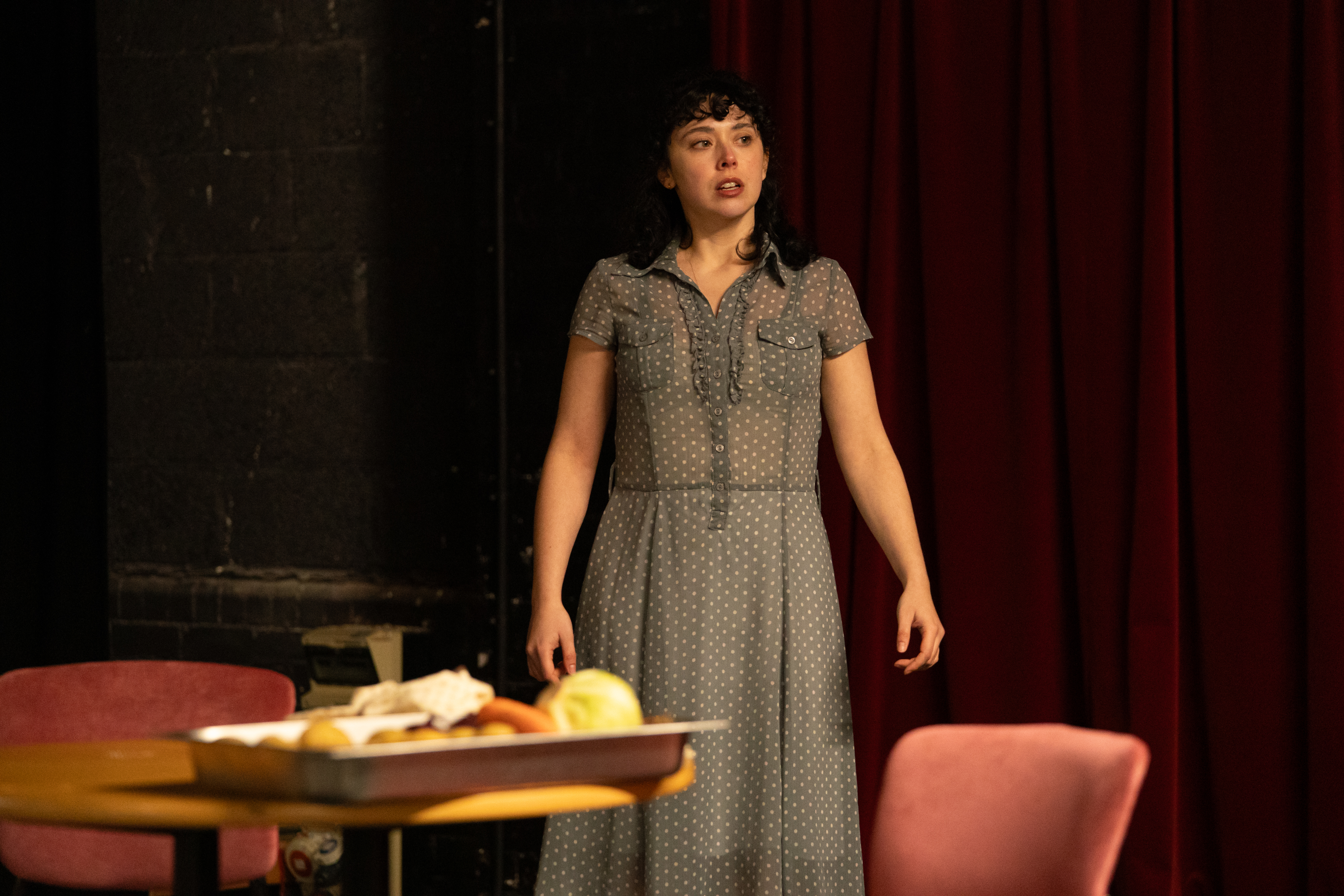 Photo by; Juan De-Leon Padmore. Instagram stills_juandlp
Ann; That’s common. Yep, keep a note pad by the side of the bed. I mean other people wake up with the ideas first thing in the morning… that’s me to be honest with you. I go to bed with the themes I’ve got to write something for. What am I going to write? And my brain just goes… yes… I’ve got it, I’ve got it.
I mean, but some people like to go for a walk, and their muse goes with them, you know or sitting on a hilltop or whatever.
We’re all different. We all find it where we can. Just know what will get you there. Know that’s what gets you there. That’s the key to future ideas. Just know where your muse is most likely to strike.
Andrew; Well, that’s brilliant Ann. Thank you very much. I have really enjoyed this conversation and I’m sure others will too.