ISSUE 223 JUNE 2026
A conversation with Yorkshire indie author Chris Berry
Chris... Journalist, singer song writer, publisher, event organiser, novelist... doer... chats with YGG's Andrew Sugden, on the lead up to the Aberford Literature Festival...
Andrew; Hi Chris, its great to be here at the Aberford Village Hall, just a week before the Aberford Literature Festival… so I thought it would be nice to learn a little bit about you and how you got to being where you are now?
Chris; I’m from Hull originally. I always wanted to be a writer; I always wrote, from being about eleven years old, poetry, writing songs, then I started writing sketches. Then started looking at writing short stories.
It wasn’t until I was in my thirties that I really started on a journalistic career, because I failed my A levels. I really wasn’t interested in passing exams at school, and I’d learnt to play the guitar when I was fifteen.
So I was playing guitar and singing, and I was performing in plays, including a John Godber play called ‘Happy Families’. And I won an acting award when I was seventeen, called the Anne Salingar Drama Award, for my part as Creon in Jean Anouilh’s Antigone.
I was playing an older fella who… If you know anything about the Oedipus Rex trilogy… Oedipus was the one who knocked off his mother… and I was her husband so I found out about that… it was like dynamite, kind of thing.
I joined the Hull Daily Mail when I was nineteen, on the advertising side. Then joined the Yorkshire Post and came over to Leeds from Hull, to live in Scholes and then, now, Aberford.
I was on advertising for a number of years, but it was
great because I learned how to do people’s ads for them. How you attract people’s attention and interest. Headlines, subheads, and pictures, and how copy works, and I launched my own magazine publishing company.
I’d launched a magazine about farming, called ‘Yorkshire Farmer’, whilst I was with the Yorkshire Post, but it was just all me. Coming up with it all on my own.
I’d been in charge of one hundred and fifty people on the advertising side before, and from there I became a writer, that I always wanted to be, interviewing people about farming stories and rural stories;
I’m not a farmer, my grandad farmed, just outside of Hull. My mum’s dad, and so I did have a link in that way. My dad had worked his way up from nothing. We came from a two up two down house in Stoneferry in Hull originally, and Dad ended up with a nice place in Cherry Burton, a nice little village outside Hull, going towards Market Weighton.
I then subsequently started up my own publishing company. I left the Yorkshire Post in 1993 and ran my own publishing company for five years.
I published eight different magazines. Four of them to do with farming. One of them, ‘Farming in Yorkshire’, was my biggest, ‘Farming in the North’ as well, and a rugby league magazine for Leeds, before they became the Leeds Rhinos… The first season in Super League, unfortunately they had the worst season ever, so it wasn’t a good time for people buying things to do with the club.
We did a number of other magazines too. Then I sold my magazines back to the Yorkshire Post in 1998 and… ‘Farming in Yorkshire’ and ‘Farming in the North’.
I took my staff of two at that time… I’d built to a staff of ten with my publishing, but the two farming magazines, I had a staff of two other guys, and we ran ‘Farming in Yorkshire’ and ‘Farming in the North’ magazines until 2008.
2004 The Yorkshire Post decided it wanted to launch a rural supplement to the Yorkshire Post on a Saturday, and they asked me to be main feature writer for it.
Andrew; I bet you were pleased.
Chris; For a lad who’d, when he’d been asked at fourteen years old, at that one careers meeting you ever have in your life, with somebody who you never know, and never see again, and doesn’t know you, and asks what do you want to be? I said journalist, and he said, five O levels and two A levels. Well, I didn’t achieve any of that. Not even close.
I wasn’t bothered about Uni. Uni wasn’t a big thing in those days, you know. And I had a great time writing about farming, and I was outside. I wasn’t in an office. I hate being in an office. And I hate the structure of the corporate world and the like so… I am very much, you know… want to do things my way.
Andrew; so a true journalist?
Chris; Yes actually.
Andrew; somebody who goes out, looks, finds things, and tells people about it.
Chris; Yes. And I do nice stories about people. I’m not a war correspondent, or anything like that, I’m somebody who does nice features. I’m a features story writer.
I like people. I want to get to know people. I like to write about them and put their stories over in a really nice way. So… with a bit of humour and… so I’ve been doing that for the Yorkshire Post ever since 2004.
And not just about farming though, I started writing for Yorkshire Post Magazine on Saturday. I started doing what’s called ‘op-eds’. Which are opinion editorials where you could voice your own opinions about issues and things in the farming community, rural community, or just generally. I did that for a few years as well.
I subsequently left the Yorkshire post in 2008 for the second time, and went freelance… and so I’ve been a freelance writer ever since.
Writing still for the Yorkshire post and also writing for a farming magazine, because although my farming magazine now didn’t exist any longer, a person who’d worked for me, a lady, had started up a comparative magazine and had got a couple of people who’d used to work for me as well, which is fine by me because I was happy. I was doing what I had always wanted to do which was, just purely writing.
I didn’t want to do the advertising thingy any more. I was writing for her as well, so I was writing for a farming magazine and the Yorkshire Post for quite… well, still writing for both of those now. They form like fifty percent of my income.
And then I wanted to write about famous Yorkshire people who were involved in entertainment. The first person I chose was Joe Longthorne, who was also from Hull, like me.
Big singer, who had his own programme on ITV on a Saturday evening at the time, for four years from 1988 to 1991 and he sold out the Royal Albert Hall, he sold out Sidney Opera House, he sold out Chicago Drury Lane, he sold out the Palladium, and he had three platinum selling albums, as well. Joe was fantastic.
I took a while getting hold of him. Like a few months before I found out where he lived and managed to talk to him.
Once I’d seen him, I was going to write a story which ended up being a five page feature story in the Yorkshire Post Magazine about his forty fears in show business, that he’d been celebrating.
Because he started on Junior Showtime when he was fourteen. So he was fifty four at the time and it was one of the best moments of my life, writing about Joe, because…
I like writing in novels, as well as autobiographies, that I write, when I’m commissioned to write them for people. I write about people who have real highs and real lows, because then you get that, you know, tears to triumph kind of thingy, where as sometimes you can write about somebody… like a flat liner… they’ve not really had that high and low. It doesn’t really have the same impact.
Andrew; Have you had your highs and lows?
Chris; Oh very much… Oh yeah, yeah, yeah. When I was beating my head against a brick wall on the advertising sides, when a new manager was coming in at the Yorkshire Post, years ago… I was in tears in the layby…tears of frustration. Tears in a layby, just letting it out of myself, years back, because of what was happening.
I’ve always been good at fighting and fighting my way out of corners… and that was a corner. I had a wife and two kids at the time… as I always say, its the same wife, I’ve just got three kids now. (We both laugh) It was a tough time, but it forced me to do what I always do, which is think, re-think, re-assess, and do something else yourself. And that’s how the magazine for farming came about.
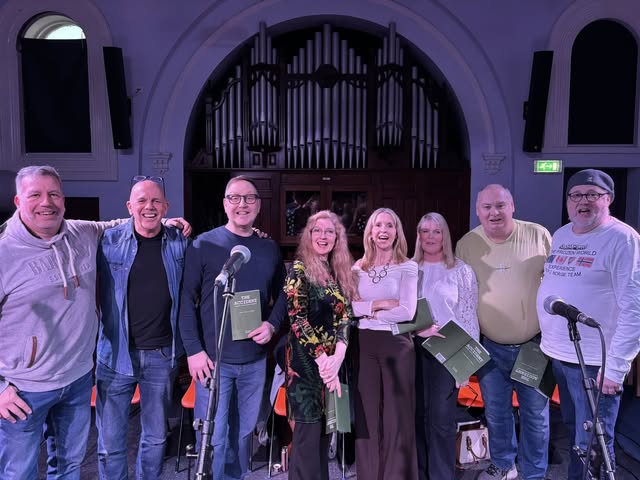
Andrew; But that’s only a fifth of you really, isn’t it?
Because you’re an organiser, you’ve got this festival coming up, The Aberford Literature Festival.
You’re a singer songwriter, which is fantastic. You’re a novelist, I ought to add you’re a publisher as well… you help people actually themselves get into publication.
Chris; Yes I like to help. Basically what happened when I went freelance, did Joes thing. What happened with Joe longthorne… Joe invited me to go on tour with him, because he’d heard my music. I’d played him my music and stuff like that.
And so I spent two years touring theatres, playing as his support act. I would play for half an hour before Joe came on.
I’ve also done the same thing for Midge Ure as well. But I was playing the pubs as well, and the bars and everything else that you do so I’ve played as a solo artist with my acoustic guitar, which is what I was doing before Joe, for half an hour.
And so I’d play a few of my own songs and then I would play the songs that jolly people on before Joe came, so things like the Wild Rover or whatever, I’d get a bit of a singalong or you know Hot Love by Marc Bolan or whatever.
Where the audience that Joe had would sing along to these things as well. Most audiences sing along to these kind of things.
And then my band, we played at great things like Staxtonbury, for a lot of years, still love to play there again but they’ve got new people who’ve got their own ideas. (Chris pauses)
Then yes, the novels. I’d come up with this first novel called ‘Tough Season’ which was about rugby league, because I’d read Dick Francis, a lot of Dick Francis novels which are about horse racing. They were horse racing, murder, thrillers.
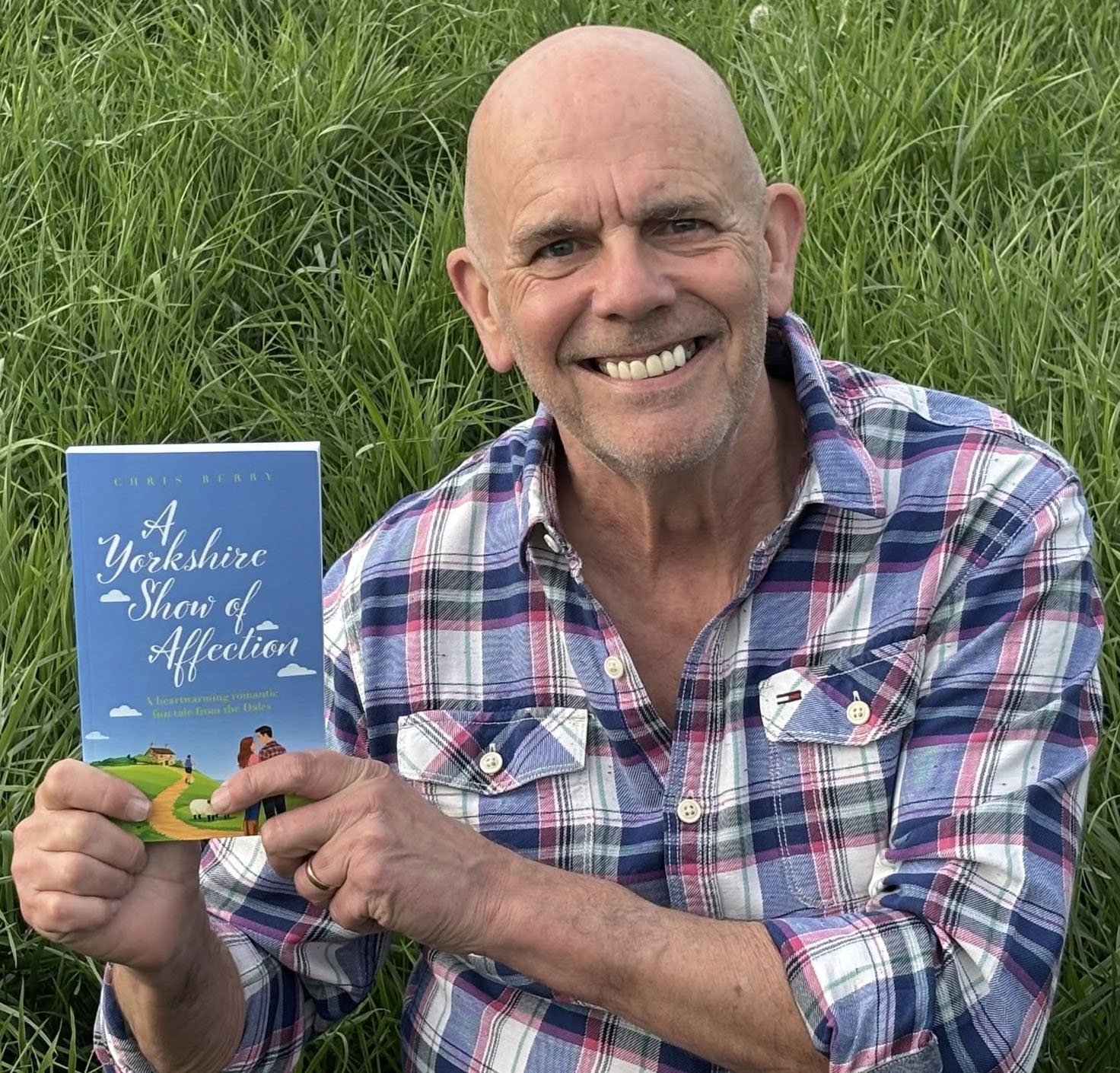
Link to A Yorkshire Show of Affection here
And I thought, what about rugby league, murder thrillers. I certainly wouldn’t make a lot of money out of it because…
but it would be something that I love, and that I know, and the background, and the people that were in that would get where I’m coming from so… and I had four of those out, and then I decided I would write a romance novel.
Andrew; Yes, what made you do that? The most recent one isn’t it?
Chris; Yes. Came out about a month ago, and I just wanted to write something that was nice. Something that my wife would like.
Andrew; Oh that’s good. (Laughs)
Raunchy rugby league hunk Greg Duggan is having a tough season with basement club Hopton Town until a new owner offers him his dream job. Suddenly Greg's life and loves are under pressure like never before from perpetrators bent on their goals. Is the reason sex, money or revenge?...
Chris; and I wanted to write something to show everybody that, I’m not just somebody that wants to have this character of Greg Duggan from the rugby league books, who played the field a bit and stuff you know.
I just wanted to have something that was a pretty book that used the Yorkshire countryside as well.
Link to A Yorkshire Show of Affection here
It was Swaledale, it uses Muker, which I’ve renamed as Upper, in the book.
And I’ve had some great reviews already, from people who live in and around Muker and Swaledale area about this. Fantastic.
It’s been a great thing to do and I plan on now writing more romance novels as well as more crime thrillers. But equally well, I love writing anything, so I constantly have this brain which is bursting with ideas.
I’ve got a character, that was in the latest of my Greg Duggan novels, that I came up with in the last one, that came out in December 2024, so its like a year and a half away now.
It’s a mysterious woman called Fortune in that one, and I’ve got a book that I want to go… going to be like a female… not Jack Reacher because I don’t want it to be the same… I don’t want it to be… I’m not a plagiarist. I want something that’s right, but I can see how she could develop as a character. And I think that would be right… (Chris pauses)
You said… asked, about helping people. Andrew Sparke and I came together…
Andrew: Of the Aberford Authors?
Chris; …four and a half years ago. Andrew contacted me. He’d seen I’d been advertising my books on social media. He was doing the same, and another chap in the village, Bill Hearn, was doing the same. And he said, I’ve done this before in other areas, getting a group together, would you be interested?
And so I said yes, and we met in the pub and from there its developed into this group now, where we’re getting twenty plus at every meeting, twice monthly.
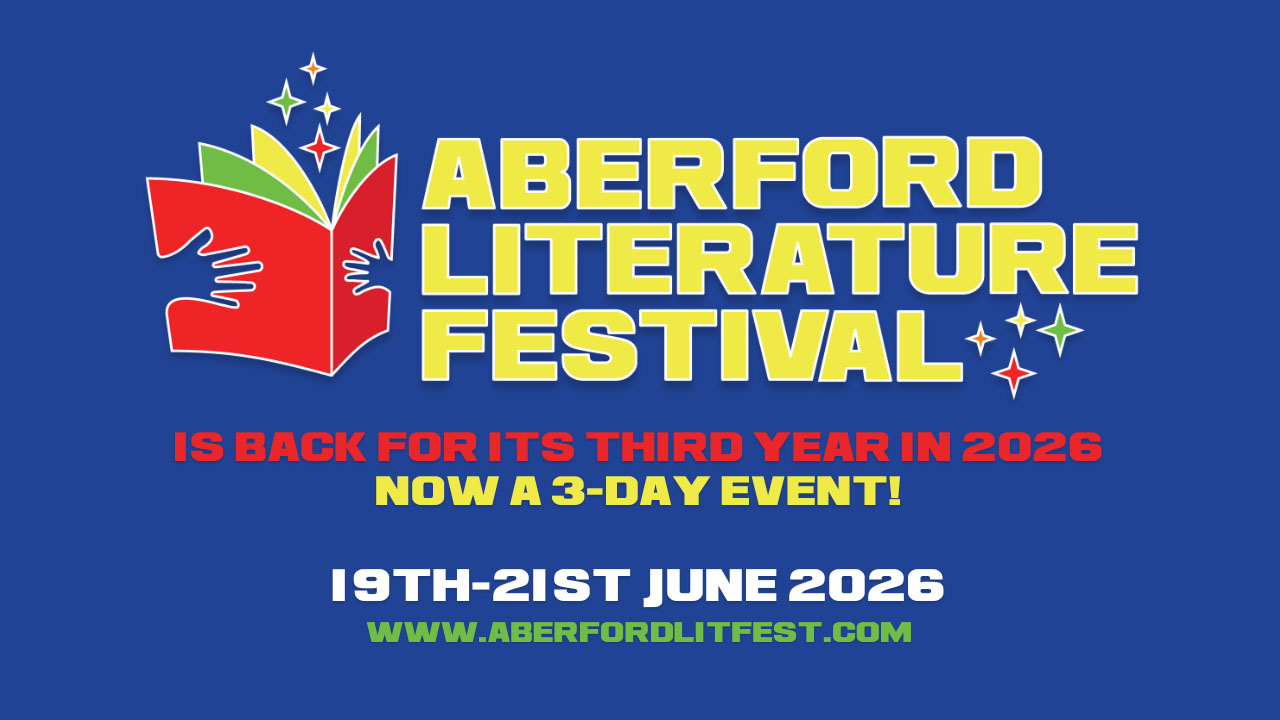
We’ve now got a festival.
You may ask/ Why come to the Aberford Festival? Well i'll tell you. Because we are all about community. We know where we are, we know where we stand. It's going to be a wonderful festival.
I tend to be a person who, once I’m involved, I’m involved, and I will then do. I’m a doer. Things get done with me. I may have a… I can see how some people at meetings might think, ‘crikey what’s he like’, you know, but I believe in making sure things are successes’.
Andrew and I get on great, we complement each other in so many different ways, and we love each other as well. It’s a really good coupling.
Bill would still be involved but Bill has gone on, he’s been doing stories about Windrush Generation, and things like that and so he’s involved and goes off to the West Indies and he’s down in London. His career has gone… We’re all not retired. I’m certainly not, but we’re all doers, you know, doing things.
So, Bills not really been with us much. It’s largely myself and Andrew that provide the focal point for the group and I came up with the idea for a festival. Andrew had it in mind as well, so again it’s a combined thing . I don’t want to give the impression its just me.
Andrew; No. you’ve got a collective haven’t you? But your one of the main forces driving it forward.
Chris; this is our third year of it now.
Andrew; It’s a big thing running a festival, I know that myself.
Chris; It is yes. I’ve done a number of other things in the past where I’ve run events and the like, as well… When you’re dealing with people who ask you the same questions each time it can get very frustrating but largely most people are very willing and involving and we’ve got a great group.
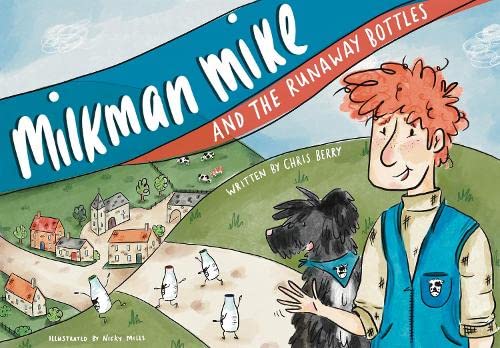
You can find Chris's Milkman Mike books here
I have to say. One of my favourite things, I’ve started working with Aberford School.
Two years ago, this is the third, they invited me for World Book Day. Not because of my crime thrillers, but my children’s books, called Milkman Mike, a bit like Fireman Sam and Postman Pat.
I wrote these stories with my kids, when my kids were young. They were three or four, or five years old. They came up with stories with me.
So I had a series of four of them published. There’s another four yet to come. And so the school invited me as a children’s author for World Book Day. So I took the assembly and then I went into all the four classes, and since then, I’ve spoken with Joe, the assistant Head. Joe said, what about Aberford Junior Authors.
That’s a great idea because my own head was… if I’ve got young people, they’ll get parents, that means we’ve got people coming to an event. So… that’s the premise of it.
Now it’s far more that that, because this is the third year of it. The first two years it’s just mainly been a Sunday event with a bit of Friday last year, that’s all. Where as this year its full Friday night, all day Saturday, all day Sunday, and with some really cracking people like John Godber and also George Webster, from CBBC’s, but also some fabulous authors, on the Sunday and great poets on the Saturday. And then the Brontes session we’ve also got, as well as something for the youth authors we’ve started.
But the thing that’s probably given me the most back for all of us this year, is setting up the library sessions that we’ve done, where adults come.
So we’re dealing with children, we’re dealing with youth authors and adults in our Aberford Authors, and this year, I’ve been going into Wetherby and Garforth libraries inviting people beforehand to come along to write their first short story, or if they've already written something years ago, to go back to writing, and we’ve had thirty people through those sessions and some of the stories they’ve written are absolutely amazing and I’m so proud of them and so pleased that I’ve been able to, you know, inspire people to do things.
And its people telling me that… I don’t like to hug it too much to me.
Andrew; the first Aberford Authors I went to, there were several people there, ladies, who’d come from some of these events, hadn’t they?
Chris; Yes.
Andrew; I could see they were inspired by you allowing them to unleash themselves, discover their own creativity and let it out.
Chris; Well it is great. Those people that came, like Ella and Rachel and Kirsty, that came. Then we’ve had others that have come as well since. That and we had another one come just last week, Diana, And Diana’s got a lot of things in the back of her mind, where she’s dyslexic, and yet she’s written this fabulous story. So there’s no bars to people, you know, from actually coming up…
What I try and harness is imaginations, and then I try and harness that imagination to then get them thinking. Lots of people start thinking things and then think that they can’t do it.
And what they’re not just doing is just giving a little bit of concentration and then putting things down on paper and then once you have the concentration, and then once you get things put down on paper, things develop. And it works.
And that’s what I’m about.
Andrew; and what’s important is that people don’t censor themselves, they allow themselves to write.
Chris; Yes, do what you want. Come up with any words you like. I don’t mind, you know. It really, really doesn’t matter, of course some editor somewhere, if you will, a big publishing house, might choose to go a certain way with it. Let’s face it, not many of us are going to be published by big publishing houses. Right.
It’s a matter of what is writing about. Writing’s about expressing yourself. It’s about getting it out of your system. About therapy, and it’s also about having fun, and having fun is the thing. And the ‘Yorkshire Show of Affection’, my novel, my romance novel, is all about having fun.